
One Roof : What It Looks Like When Courses, Community, and Client Care Come Home
There is a moment — and most women who have built a practice know it well — when the work itself is thriving, but the architecture around it is not.
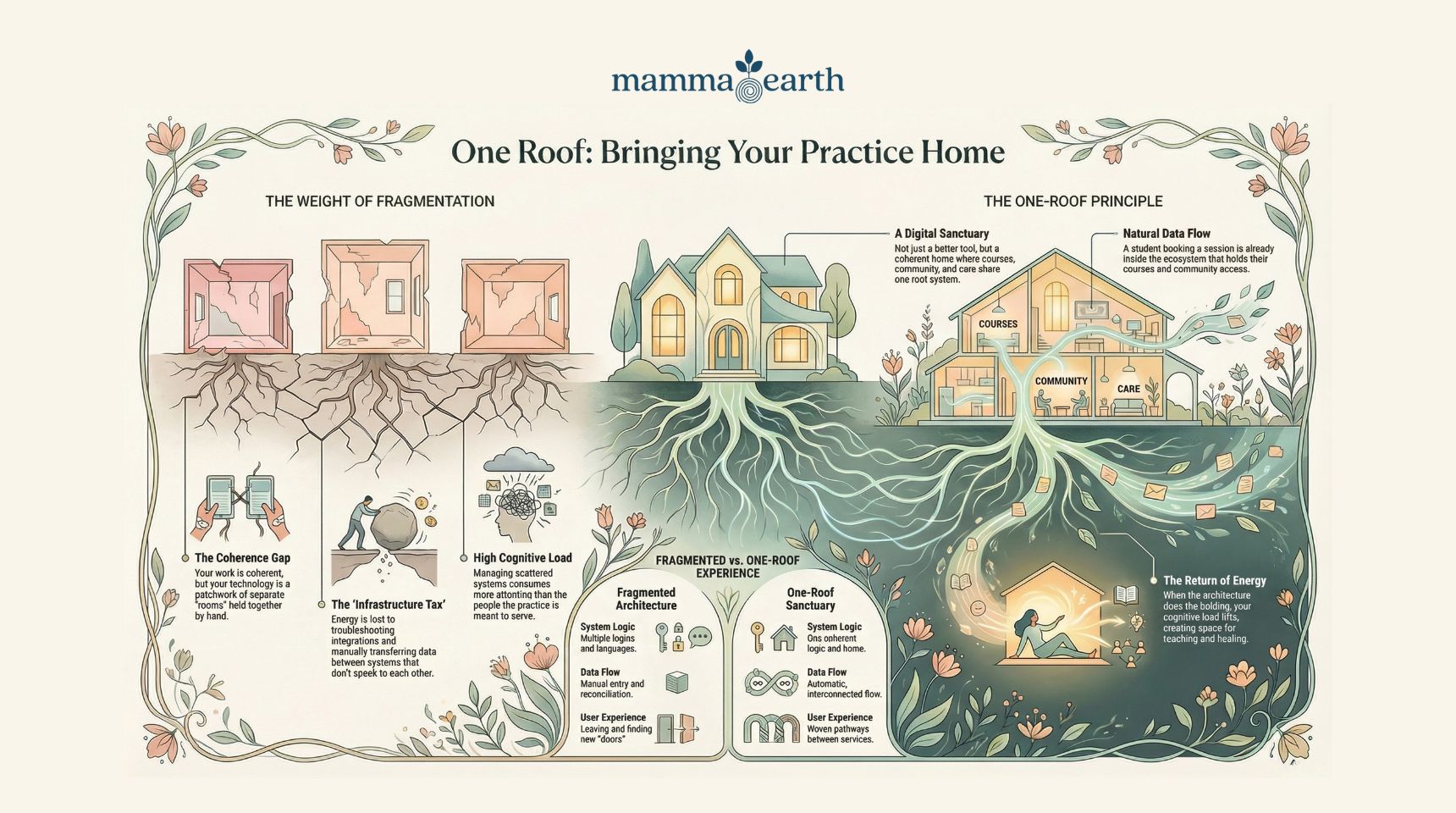
The courses are alive. The community is growing. The bookings are steady. And yet, the daily experience of running it all feels like holding five separate rooms together with your bare hands. Courses live on one platform. Community on another. Bookings in a third. Email in a fourth. Payments scattered across them all. Every platform requires its own login, its own logic, its own language.
The work is coherent. The technology is not.
This is not a failure of skill or strategy. It is the natural consequence of having outgrown a patchwork of tools that were never designed to hold the full shape of soul-led work. And there is a different way to hold it all — one that begins not with a list of features, but with an architectural question: what would it mean for everything to come home?
The Real Cost of Holding Everything Apart
When a woman’s courses, community, bookings, and client care each live on separate platforms, the cost is rarely visible in a balance sheet. It shows up somewhere quieter: in the hours spent transferring information between systems that do not speak to each other. In the energy lost to troubleshooting integrations that were never built to hold something whole. In the subtle, persistent sense that the technology is consuming more attention than the people it is meant to serve.
A woman running an established healing practice, a training school, a movement community, or a creative teaching body knows this weight. She has built something real. Her people are there. And yet a significant portion of her week goes not to the work, but to the infrastructure holding it together.
The platforms were never the problem. They simply were not designed to hold the full shape of what she carries.
What Comes Home When Everything Lives Under One Roof
A digital sanctuary is not a website with better features. It is a coherent home — one place where courses, community spaces, bookings, email, payments, client records, and public presence all live together, designed around the specific shape of a woman’s practice rather than the template of a software company.
When everything comes under one roof, the change is structural before it is emotional. The data flows. A woman who books a session is already inside the ecosystem that holds her course access, her community membership, her communications. Nothing needs to be manually transferred, re-entered, or reconciled. The architecture does the holding.
And then the emotional shift arrives, because it always does. When the infrastructure is coherent, energy returns. The hours that went to managing scattered systems come back. The cognitive load of remembering which platform holds which piece quietly lifts. What remains is space — space for the teaching, the healing, the creative work, the people.
This is what sanctuary architecture means in practice: not a better tool, but a coherent home. One place where the whole of the work is held with the same care and intelligence as the work itself.
The Architecture Behind the Homecoming
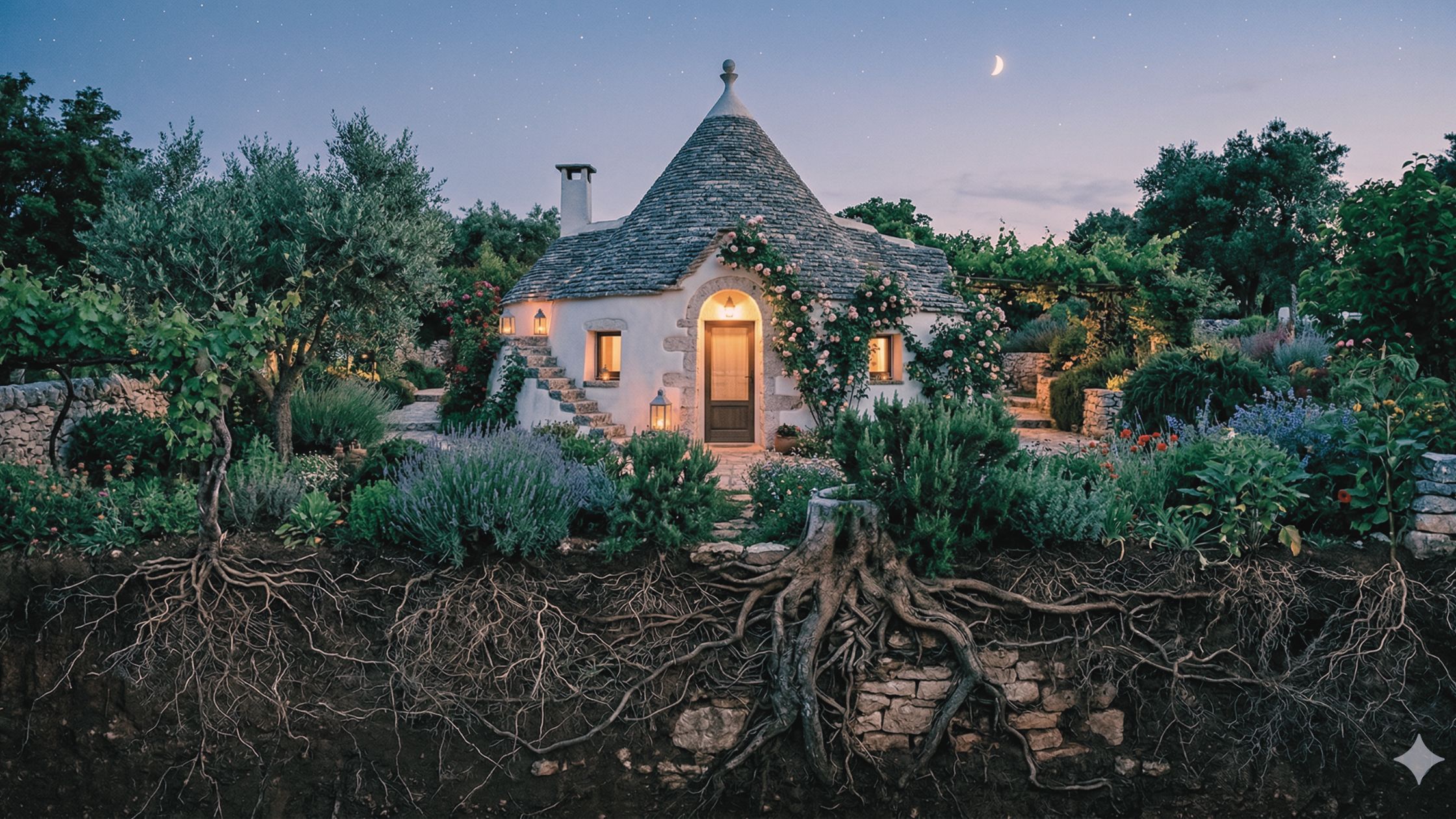
In a forest, nothing stands alone. Every tree is connected through a root system that shares nutrients, water, and information. The forest does not operate as a collection of isolated organisms — it operates as a single, coherent ecosystem.
A sanctuary holds the same principle.
When courses, community, and client care share one root system, they nourish each other. A student who finishes a course is already inside the community that will support her next step. A client who attends a retreat is already connected to the ongoing teaching that deepens the experience. A community member who is ready for one-to-one work does not need to leave and find her way back through a different door.
Every pathway is already woven into the same ground.
This is not a feature. It is a design philosophy. The architecture of a digital sanctuary is built on the understanding that sacred work is relational, interconnected, and alive — and the infrastructure holding it must be the same.
We call this The One-Roof Principle: the architectural intelligence of bringing everything that belongs together under one coherent structure, so the technology disappears into the background and the work returns to the foreground.
What This Looks Like in a Living Practice
A shamanic teacher whose training programme, supervision circle, and graduate community all live in one place — where a graduate’s transition from student to practitioner happens naturally, without a separate onboarding process or a new platform to learn.
A somatic practitioner whose one-to-one bookings, group courses, and resource library share the same client records — where every interaction is held in context, and no information falls through the cracks between platforms.
A wellness centre founder whose retreats, memberships, and practitioner directory all connect — where a visitor who attends one retreat can find ongoing support, community, and teaching without starting the search again from scratch.
In each case, the woman’s work does not change. What changes is the ground beneath it. The architecture becomes invisible, and the practice becomes the thing that people encounter first.
Coming Home
The phrase all-in-one platform gets used often in the technology world, and it usually means a long list of features packaged under a single subscription. That is not what we mean.
When we say one roof, we mean a home. A coherent, designed, intentional space where the whole of your life’s work can live, breathe, and grow together. Not a marketplace. Not a shopfront. A sanctuary.
If your practice has reached the place where the work has outgrown the architecture holding it, there is ground that can hold you. The Sanctuary Tea Call is a conversation — unhurried, unscripted, and free — where we sit with the shape of your work and explore what a coherent home might look like for it.
Your work already has substance. It already has people who trust it. It deserves an architecture that holds it whole.